


Hair Thinning on GLP-1 Medications: Why It Happens & What Can Help

You’re making progress with your weight management, your clothes fit differently and you’re feeling more confident. Then you notice more hair in the shower, on your brush or around the house. Naturally, it can feel worrying.
Hair thinning is something some people notice whilst using medicines such as Wegovy or Mounjaro.
It doesn’t happen to everyone, and it doesn’t automatically mean permanent hair loss.
Let’s explore why it can happen, what you can do and where treatments such as minoxidil, Loniten and finasteride may fit. The starting point is understanding what is causing the thinning.

Why might hair thin during weight loss?
Hair follicles follow a cycle of growth, rest and shedding. Significant changes in the body can disturb that cycle, causing more hairs to enter the resting phase together.
One recognised trigger is substantial or rapid weight loss. Illness, stress and nutritional deficiencies can also contribute. When shedding follows a trigger like this, it is often called telogen effluvium.
With reduced appetite, it can become harder to eat enough varied food. If nausea or vomiting is also affecting your meals, your nutritional intake deserves attention.
However, hair loss during GLP-1 treatment should not automatically be blamed on weight loss or a vitamin deficiency. Other causes may need investigating. [1,2]
Is it the medication, the weight loss — or both?
Hair loss is recorded in the UK product information for Wegovy and Mounjaro. Mounjaro acts on both GIP and GLP-1 receptors, although it is often grouped with GLP-1 medicines in everyday conversation.
In studies of semaglutide 2.4 mg, hair loss was reported in 2.5% of participants, compared with 1% receiving placebo. The Wegovy product information describes these events as mostly mild, with most affected patients recovering whilst continuing treatment.
In pooled tirzepatide weight-management studies, hair loss was reported in 4.9% of participants, compared with 1% receiving placebo.
These figures come from different studies. They cannot reliably tell us which medicine will cause more shedding for an individual, or prove exactly why it happens.
Weight loss is a recognised trigger, but the contribution of medication effects and other factors is still being explored. There is no single explanation that fits everyone. [3,4]
What does temporary shedding look like?
Telogen effluvium usually causes shedding across the scalp rather than one isolated bald patch. Your ponytail may feel smaller or your hair may look less full.
A confusing feature is the delay: shedding can appear around two to four months after the triggering event. What you see today may reflect changes that happened earlier.
That delay also means recovery is gradual. Hair does not immediately return to its previous thickness as soon as your diet or weight stabilises. [2]
Will my hair grow back?
Temporary shedding often improves once the underlying trigger settles. The British Association of Dermatologists explains that the shedding phase commonly lasts three to six months, with recovery of volume taking longer.
Most straightforward cases do not require a hair-growth medicine. Addressing the cause and allowing recovery time are usually the priorities.
If shedding continues beyond six months, keeps recurring or is becoming more noticeable, arrange a review. Temporary shedding and pattern hair loss can occur together, so persistent thinning deserves a fresh assessment. [1]
Could it be pattern hair loss instead?
Pattern hair loss, also called androgenetic alopecia, involves gradual changes in susceptible follicles.
In men, this commonly affects the hairline and crown. In women, it often appears as a widening parting or thinning over the top of the scalp.
A period of increased shedding may make previously subtle pattern thinning more obvious. Your clinician may therefore identify more than one process.
This distinction matters: medicines with evidence for pattern hair loss are not automatically appropriate for temporary shedding. Choosing treatment before establishing the cause can mean unnecessary expense and exposure to side effects. [5,6]
What should I do when I first notice thinning?
Start by contacting your prescribing team or GP. Explain when the change began, how your weight has changed, what you are managing to eat and whether you have other symptoms.
Mention recent illness, significant stress, other medicines and any previous hair thinning. Your clinician may examine your scalp and consider tests, such as checking iron stores or thyroid function, depending on your history.
You do not need every possible blood test simply because you are losing hair. Investigations should answer a clinical question.
Monthly photographs in similar lighting can help you describe changes. Checking your hairline repeatedly throughout the day is unlikely to give a useful picture and can make the worry feel bigger. [1,14]

Support your nutrition — even with a smaller appetite
The aim is to eat well whilst losing weight. Very small portions and missed meals can make a balanced intake harder to achieve.
Try including a protein source in your meals: eggs, fish, lean meat, yoghurt, tofu, beans or lentils. Include fruit, vegetables and other foods that provide a range of nutrients.
Smaller, regular meals may be easier if your appetite is reduced. Persistent nausea, vomiting or difficulty eating needs a medication review and may warrant dietetic support.
Supplements should be guided by need. Taking iron without assessment is not a substitute for finding out whether you are deficient.
Bring a list of any “hair vitamins” or supplements to your appointment. Ask what each product is expected to do, whether you need it and whether it could affect your medicines or investigations.
Your weight-management plan should support your overall health, including adequate nutrition. [2]
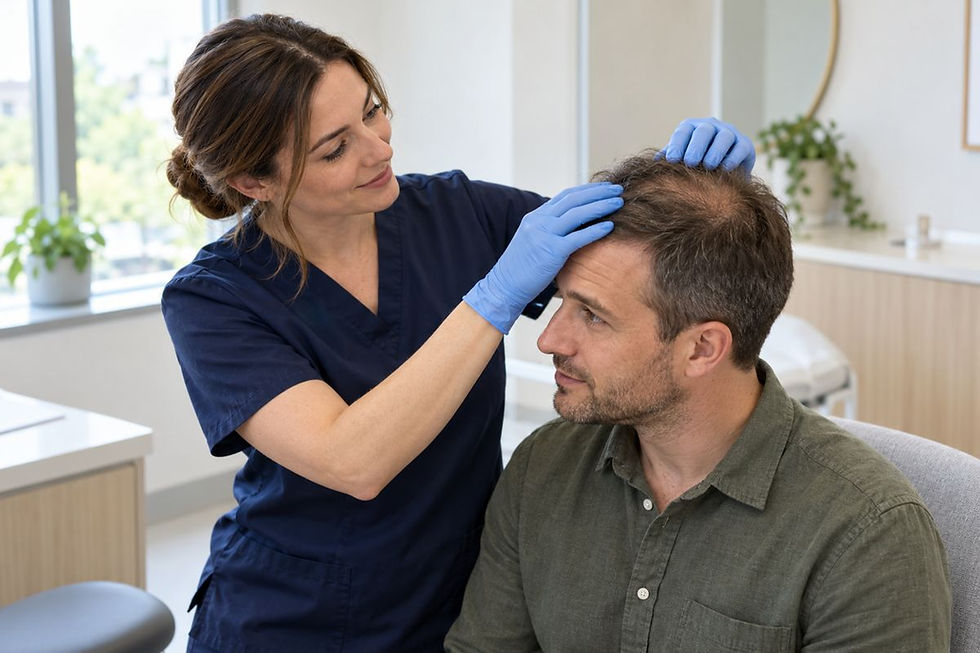
Minoxidil: what is it and how effective is it?
Minoxidil is used to support hair growth in certain types of hair loss. It comes in topical preparations applied to the scalp and in oral tablets prescribed in selected circumstances.
Topical minoxidil has established evidence for male and female pattern hair loss. Some people notice improved density or scalp coverage; others mainly benefit from stabilising further thinning.
For example, a study described in the UK product information for a women’s 5% foam found a greater increase in hair count than the inactive foam after 24 weeks: approximately 13 additional hairs per square centimetre versus four.
That is evidence of an average treatment benefit, not a promise that everyone will regain their previous thickness. Response depends on the diagnosis, product and individual.
The evidence is strongest for pattern hair loss. It should not be presented as a proven treatment specifically for GLP-1-associated shedding. [7]
What should I expect with topical minoxidil?
Topical treatment needs consistent application to the scalp according to the particular product’s instructions. Using extra does not improve results.
Improvement takes months. Product-specific review and stopping instructions differ, so follow your leaflet and agreed plan rather than a generic internet timetable.
Some people experience an initial increase in shedding as the hair cycle changes. This can be unsettling, but persistent or marked worsening needs advice.
Possible side effects include scalp irritation, dryness, itching and unwanted hair growth outside the treated area. Do not apply it to an inflamed, damaged or painful scalp without medical advice.
If you develop chest pain, a rapid heartbeat, faintness, dizziness or unexplained swelling, stop treatment and seek medical advice; severe symptoms require urgent help. [8]
For pattern hair loss, any benefit generally requires continued treatment. Starting therefore means considering the ongoing routine, cost and reviews, not just the first bottle. [5]
Loniten: is it different from minoxidil?
Loniten is a brand of oral minoxidil. It is the same active ingredient delivered as a tablet, rather than applied to the scalp.
In the UK, Loniten is licensed for severe hypertension. Using oral minoxidil for hair loss is off-label: the medicine has a licence, but hair loss is outside its licensed indication.
Clinicians sometimes prescribe low-dose oral minoxidil for selected patients after assessing suitability. It may be considered when topical treatment is unsuitable or difficult to tolerate.
Off-label prescribing needs a clear discussion of the evidence, uncertainties, risks and monitoring. It is not a reason to choose tablets simply because they seem stronger. [9,10]
How effective is oral minoxidil?
Evidence supports a potential benefit in pattern hair loss, but it is not automatically more effective than topical treatment. Everyone responds differently.
A randomised trial involving 90 men compared oral minoxidil with topical minoxidil over 24 weeks. Oral treatment did not show superiority overall for the main hair-density outcomes, although one photographic assessment favoured it at the crown.
This was a study of male pattern hair loss, not shedding during GLP-1 treatment. Its findings cannot establish that Loniten prevents or reverses weight-loss-related shedding.
The practical question is whether oral treatment offers an appropriate benefit for your diagnosis and circumstances. Results vary, and follow-up is needed to assess both response and tolerability. [11]
What are the risks of oral minoxidil?
Oral minoxidil affects the circulation, so it needs more than a hair photograph and a quick prescription.
Your prescriber should review your blood pressure, medical history and other medicines. Heart or kidney conditions, low blood pressure and pregnancy plans are particularly relevant.
Possible effects include increased facial or body hair, dizziness, palpitations and fluid retention, which can cause ankle swelling or weight gain. Serious complications, including fluid around the heart, are recognised.
Monitoring should follow your individual treatment plan. Chest pain, breathlessness, fainting or significant swelling needs urgent assessment.
Dehydration from vomiting or diarrhoea during weight-management treatment should also be reported promptly. Do not start tablets, adjust the dose or combine oral and topical minoxidil without your prescriber’s advice.
Minoxidil is generally avoided during pregnancy and breastfeeding; discuss trying to conceive before treatment. [9,10]
Finasteride for men: where does it fit?
Finasteride is a prescription medicine used for male pattern hair loss. It reduces conversion of testosterone into dihydrotestosterone, or DHT, which contributes to follicle miniaturisation in susceptible men.
Its role is to slow that process and potentially improve growth. It does not correct inadequate nutrition, replace iron or directly treat a temporary shedding trigger.
Clinical studies in men with mild to moderate pattern hair loss found benefits in hair counts and assessments of appearance compared with placebo.
However, it is not a guaranteed route back to a full head of hair. The product information notes that effectiveness in a receding temple hairline and advanced baldness has not been established.
Changes take months, and continued treatment is needed to maintain benefit. Assessment should establish whether male pattern hair loss is present before finasteride is considered. [12]
Finasteride: side effects you should understand
An informed decision includes the risks as well as the possible benefits.
Finasteride can cause reduced sex drive, erection difficulties and ejaculation problems. Sexual side effects have been reported to persist after stopping.
The MHRA also warns about depression and suicidal thoughts. Tell your prescriber about any previous depression or suicidal thoughts before starting, and report new mood changes or sexual symptoms.
If taking finasteride 1 mg for hair loss, stop it and contact your healthcare professional promptly if you develop depression or suicidal thoughts. If you feel at immediate risk of harming yourself, call 999.
Read and keep the patient information leaflet and patient alert card, and attend reviews. [13]
Finasteride is not offered here as a treatment for women. Pregnant people, or those who may become pregnant, must not handle crushed or broken tablets because of the risk to a male fetus. [12]
Are there other ways to help?
Yes. Treatment may involve correcting a confirmed deficiency, managing a scalp condition or arranging dermatology assessment rather than starting one of these medicines.
Gentle hair care can limit additional damage: avoid tight pulling styles, harsh brushing and excessive heat.
Hair fibres, a different hairstyle or other camouflage options may help confidence whilst the cause is addressed. These change appearance rather than treating the underlying problem.
If hair loss is affecting your wellbeing, tell your clinician. You do not have to wait until it is severe to ask for support.
When should I seek medical assessment?
Arrange prompt assessment for bald patches, scalp pain, redness, scaling, signs of scarring or loss of eyebrows or eyelashes.
Also seek advice if shedding is persistent, rapidly worsening or accompanied by symptoms such as marked tiredness, feeling unusually cold or difficulty maintaining food intake.
Do not stop your GLP-1 medicine solely because of hair thinning without discussing it with your prescriber. A review can consider your symptoms, nutrition, progress and treatment options together.
Looking after your hair and your health
Noticing thinning can knock your confidence, especially when other aspects of your weight-management journey are going well.
At AJ Hill Aesthetics, we encourage you to raise concerns early. Understanding the cause helps you make a sensible decision about the next step.
Temporary shedding may recover with time and attention to its trigger. Pattern hair loss may benefit from treatment after assessment. The right approach is individual, and no medicine can guarantee regrowth.
This article provides general information and does not replace an assessment or your medicine’s patient information leaflet.
Sources & further reading
Information checked: 1 October 2026.


